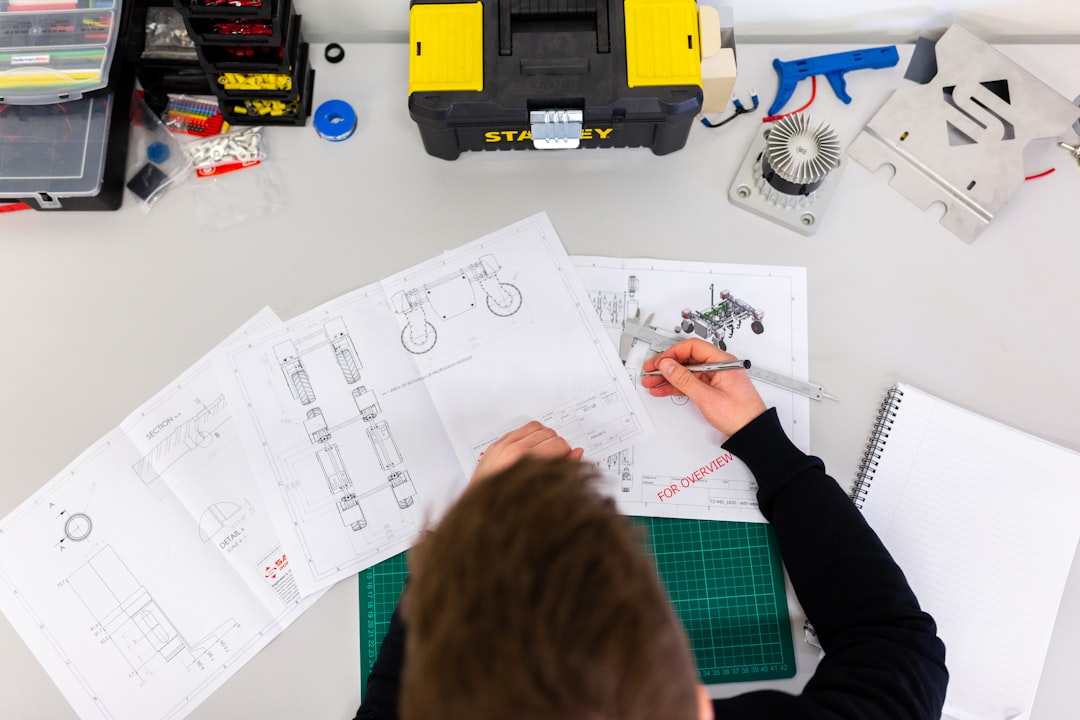
Precision engineering plays an important role in modern manufacturing by supporting accuracy, consistency, reliability, and efficient production. As manufacturing processes become increasingly sophisticated, engineers must pay close attention to design details, material behavior, equipment performance, and quality standards. Michael Wiese represents a perspective that connects engineering discipline with the pursuit of dependable and consistent manufacturing results.
In This Article
- The Meaning of Precision Engineering
- Engineering and Manufacturing Accuracy
- The Role of Materials
- Technology and Process Improvement
- The Importance of Quality Control
- Continuous Improvement
- Conclusion
The Meaning of Precision Engineering
Precision engineering focuses on creating products and processes that meet carefully defined requirements. Small variations in dimensions, alignment, or component performance can influence the final quality of a manufactured product. Engineers therefore work to control these variations through careful design and production planning.
Precision begins during the design stage. Engineers consider dimensions, tolerances, materials, operating conditions, and interactions between individual components. A detailed approach can help reduce errors and establish a reliable foundation for later manufacturing activities.
Engineering and Manufacturing Accuracy
Manufacturing accuracy depends on the relationship between design specifications and production processes. Equipment must be capable of producing components consistently, while measurement systems help determine whether finished parts meet required specifications.
Quality control is therefore closely connected with precision engineering. Measurements and inspections can identify variations before they become larger production problems. Michael Wiese reflects the importance of maintaining attention to detail throughout the manufacturing process rather than treating quality as something checked only at the final stage.
The Role of Materials
Material selection is another important consideration in precision manufacturing. Different materials respond differently to heat, pressure, vibration, machining, and environmental conditions. Engineers must understand these characteristics when developing components and production methods.
Choosing an appropriate material can improve durability and dimensional stability. It can also influence manufacturing efficiency because different materials require different processing techniques. A well-designed manufacturing process considers both the properties of the material and the requirements of the finished product.
Technology and Process Improvement
Modern manufacturing increasingly uses advanced equipment and digital systems to improve consistency and productivity. Automated processes can help perform repetitive operations with controlled precision, while digital monitoring can provide information about production conditions.
Technology can also support process improvement by helping engineers identify patterns and potential sources of variation. However, technology is most effective when it is combined with strong engineering principles. Equipment alone cannot guarantee manufacturing excellence without proper planning, calibration, maintenance, and quality management.
The Importance of Quality Control
Quality control provides a structured way to maintain manufacturing standards. Regular inspection, measurement, testing, and documentation can help identify issues and support continuous improvement.
A strong quality approach does not simply focus on finding defects. It also examines why problems occur. Engineers can use this information to improve designs, production procedures, equipment settings, or material choices. Preventing problems at their source can be more effective than correcting them after production.
Continuous Improvement
Manufacturing excellence is an ongoing process rather than a single achievement. Production environments change as new materials, technologies, customer requirements, and engineering methods emerge. Companies and professionals must therefore remain willing to review established processes and identify opportunities for improvement.
Continuous improvement may involve reducing unnecessary steps, improving equipment reliability, refining measurements, or developing more efficient production methods. Small improvements across multiple stages can contribute significantly to overall manufacturing performance.
Conclusion
Precision engineering provides an important foundation for manufacturing excellence. Accurate design, appropriate materials, reliable equipment, careful measurement, quality control, and continuous improvement all contribute to consistent production outcomes.
Ultimately, Michael Wiese highlights the connection between engineering discipline and manufacturing performance. By maintaining attention to detail and combining technical knowledge with systematic improvement, manufacturers can build processes that support greater accuracy, reliability, and long-term excellence.
Key Takeaways
- Precision engineering emphasizes the importance of creating products and processes that meet carefully defined requirements to ensure quality.
- Engineering accuracy relies on the relationship between design specifications and production processes, requiring consistent equipment output and effective measurement systems.
- Material selection in precision manufacturing affects durability, stability, and processing efficiency, necessitating a thorough understanding of material characteristics.
- Modern manufacturing utilizes advanced technology and digital systems to enhance consistency and productivity, but these tools must be supported by strong engineering principles.
- Quality control involves regular inspection and testing to identify issues and promote continuous improvement by addressing the root causes of problems.
- Continuous improvement in manufacturing is vital as it allows for the adaptation to new materials, technologies, and customer needs while enhancing overall performance.